Comfort where the ductwork doesn't go
A ductless mini-split puts heating and cooling exactly where it's needed — an addition, a shop, a cabin, a bonus room over the garage — without opening walls or tying into a system that was never sized for the extra space.
How a mini-split works
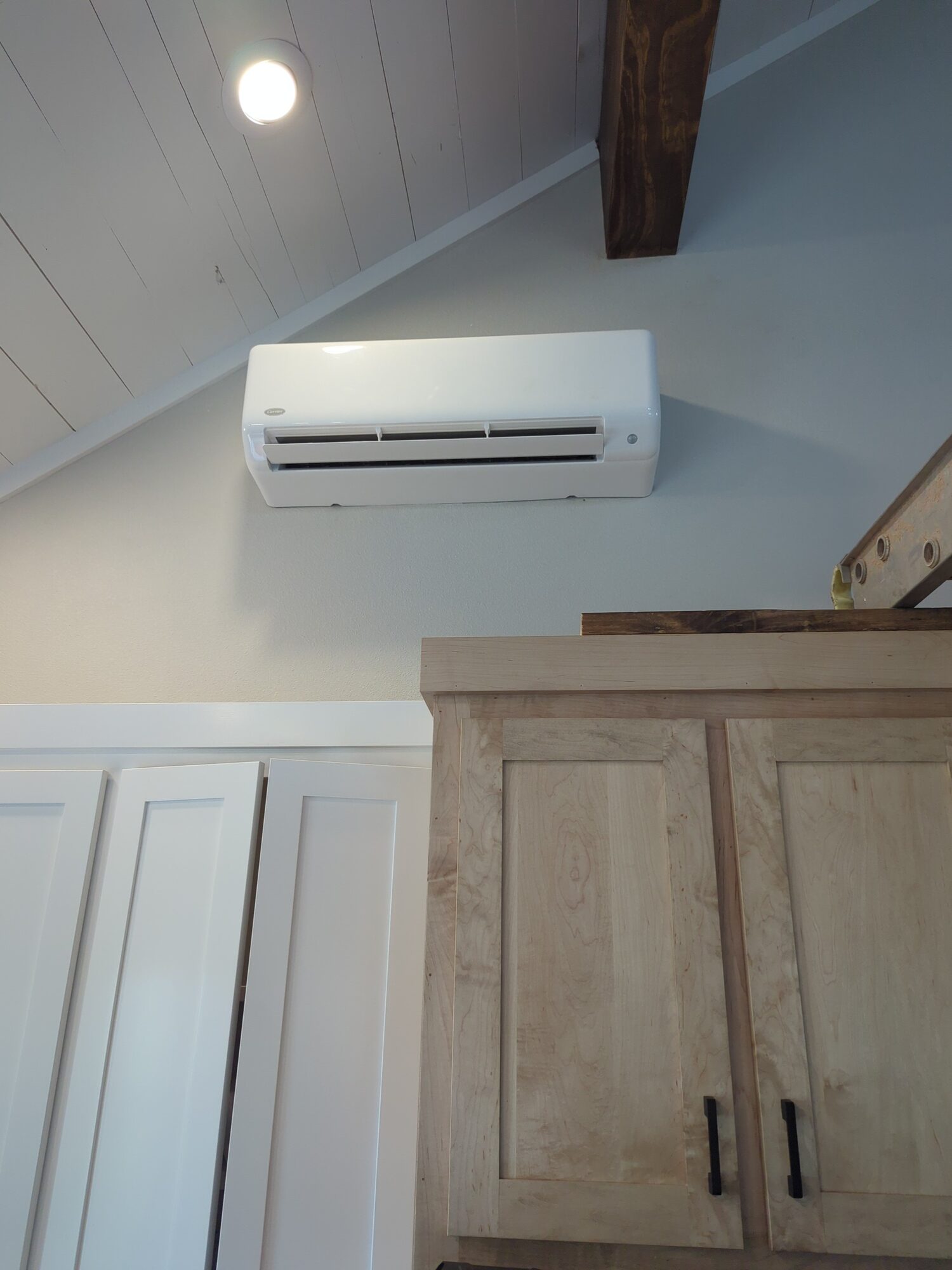
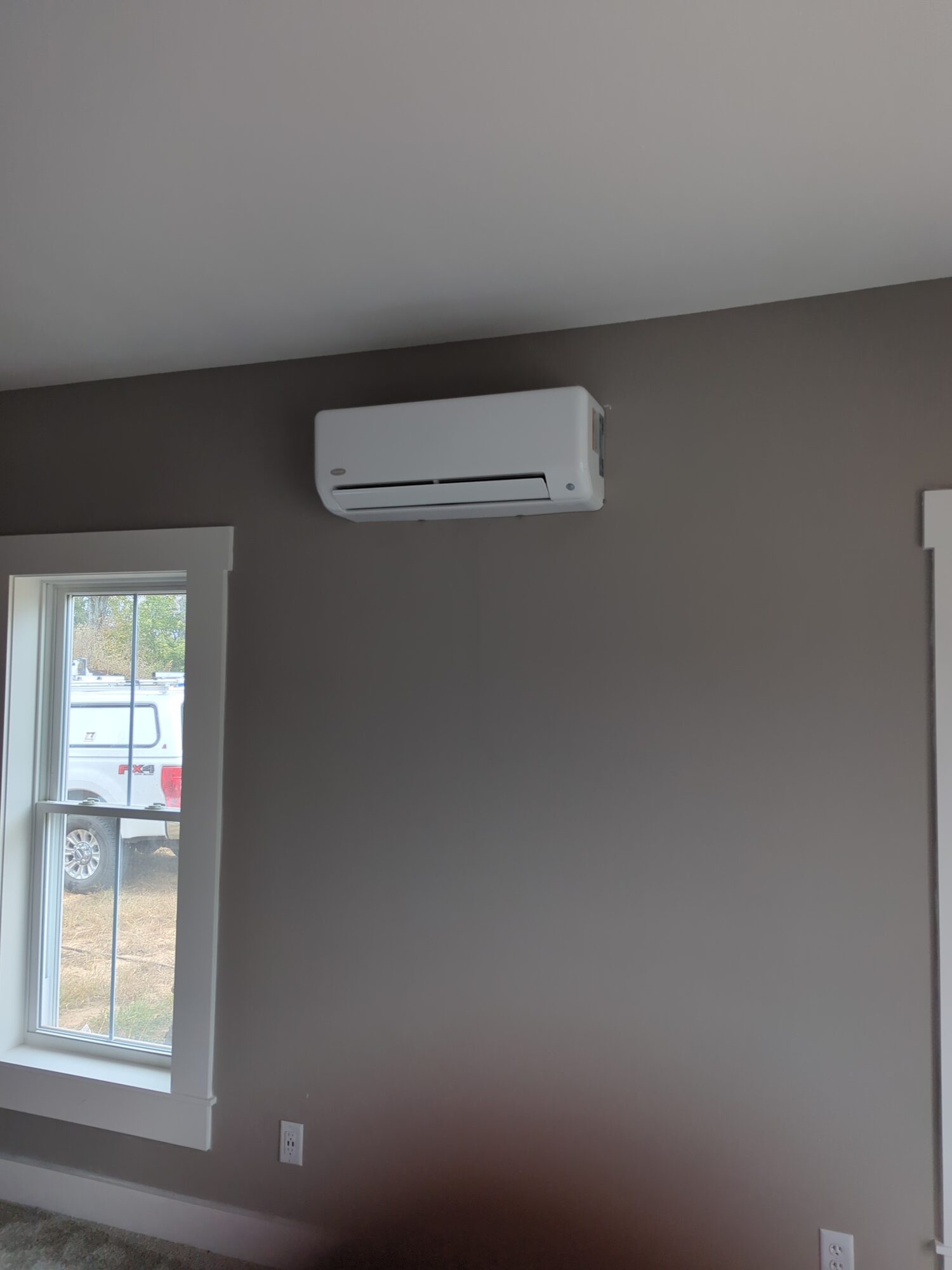
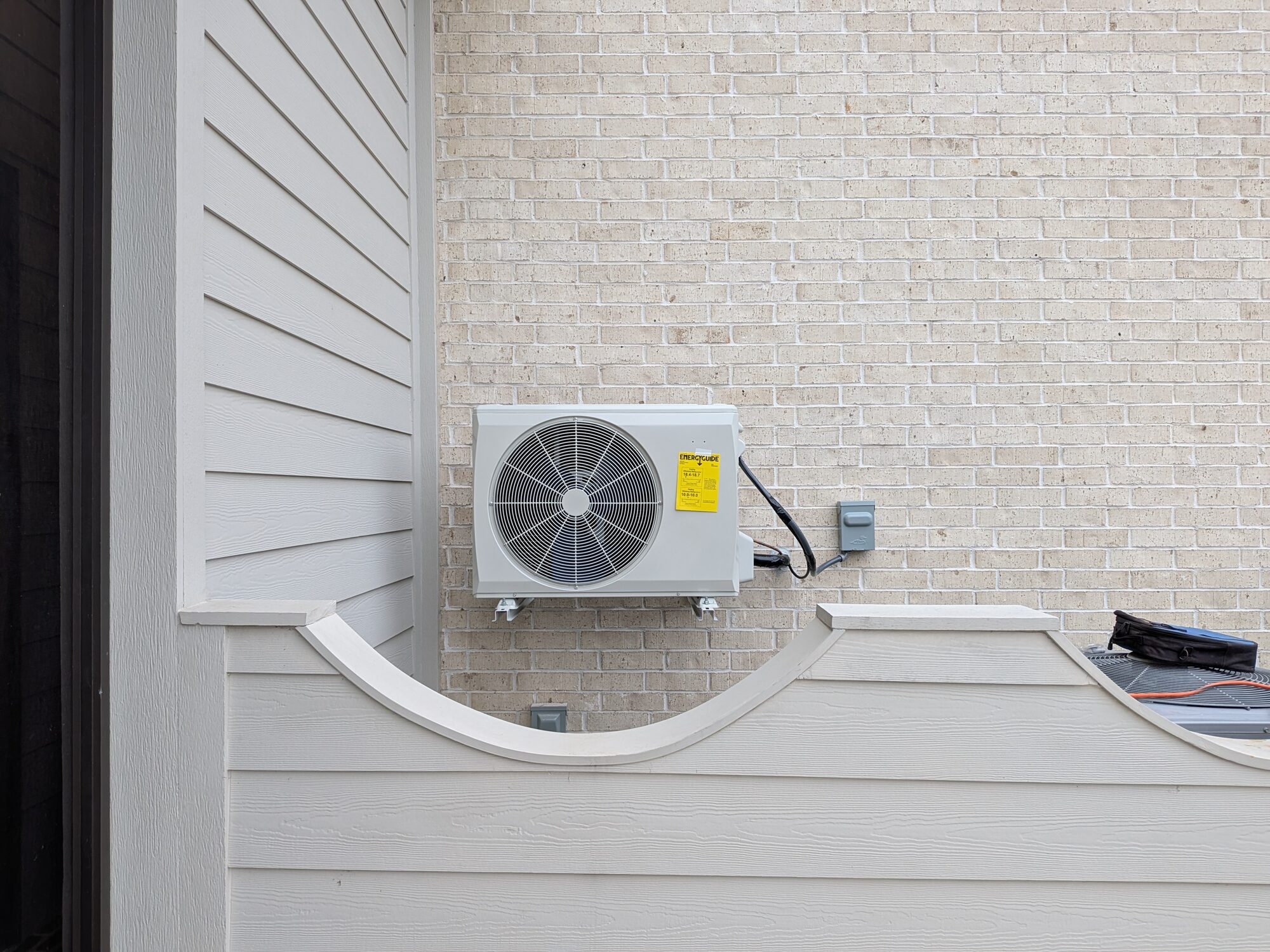
A small outdoor condenser connects to one or more indoor units through a refrigerant line about the size of a garden hose, run through a three-inch hole in the wall. No ductwork, no plenums, no attic runs. The indoor unit mounts high on a wall, in the ceiling, or low along the floor, and conditions the room it's in.
Because there's no duct, there's no duct loss — the air is heated or cooled in the room that needs it, not somewhere down a run of leaky attic flex. Modern inverter-driven units run at the speed the room calls for rather than cycling on and off, which makes them quiet, efficient, and good at holding a steady temperature. Every mini-split we install is a heat pump: heating in winter and cooling in summer from the same equipment.
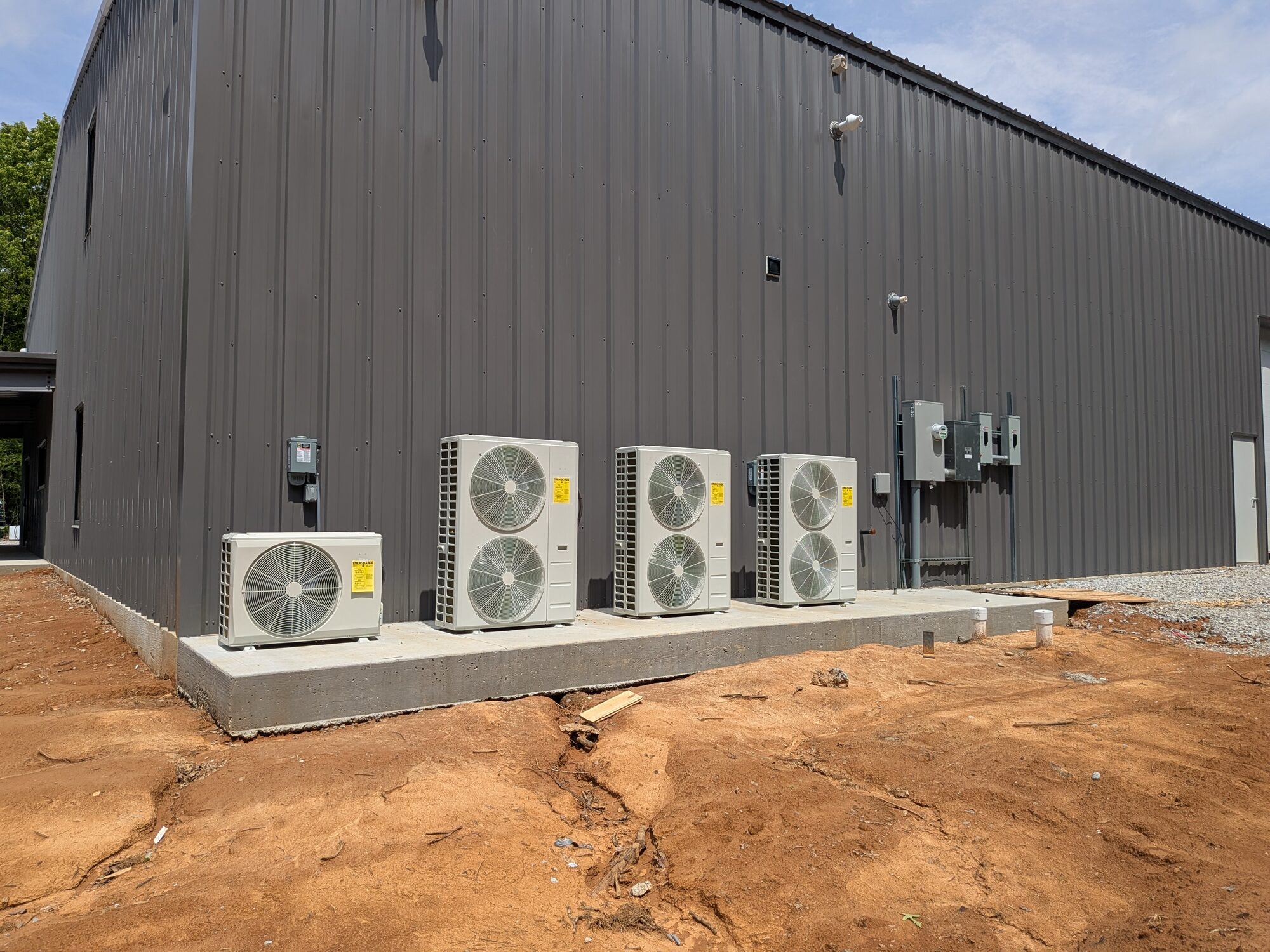
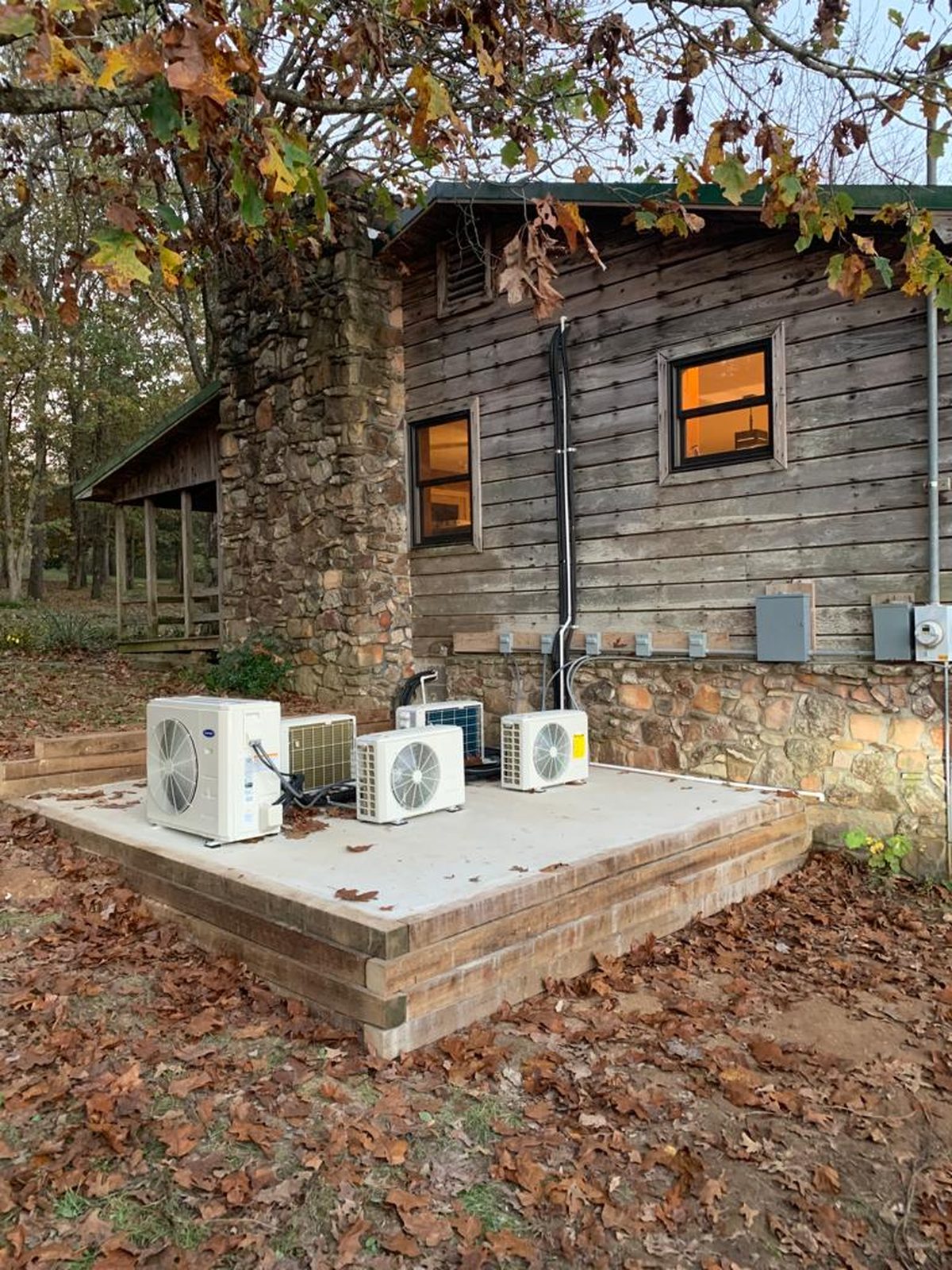
A multi-zone system runs several indoor units off one outdoor condenser, each with its own thermostat, so a shop office and the shop floor — or three bedrooms in an older house — can be set independently.
Where a mini-split is the right answer
Additions and bonus rooms
The room over the garage, the sunroom, the addition off the back. Extending the existing ductwork means a system that was sized for the original house now has to carry more than it was designed for. A mini-split conditions the new space on its own.
Shops, garages and cabins
Detached buildings with no ductwork and no easy way to add it. One outdoor unit, one or two indoor heads, and a shop that's usable in July and January.
The room that never keeps up.
Every house has one — the bedroom at the end of the duct run, the room over the garage, the office that's always five degrees off. Instead of re-ducting the house to fix one room, a mini-split gives that room its own system and its own thermostat.
When it isn't
A mini-split isn't the right replacement for a house that already has good ductwork — a properly sized Carrier Infinity system will do that job better and cost less per ton. And for a large home or commercial building with many zones and simultaneous heating and cooling needs, the bigger sibling is VRF, which runs on the same idea at a different scale.
We'll tell you which one fits. Like everything we install, a mini-split starts with a load calculation on the actual space, and it's sized, set and commissioned to the manufacturer's specification before we call it finished.
Have a space that needs its own comfort?
Tell us what the room is, how it's built, and how you use it. We'll look at it and give you a straight answer on whether a mini-split is the right fit.
Financing is available with approved credit through Wells Fargo and FTL Finance. See options