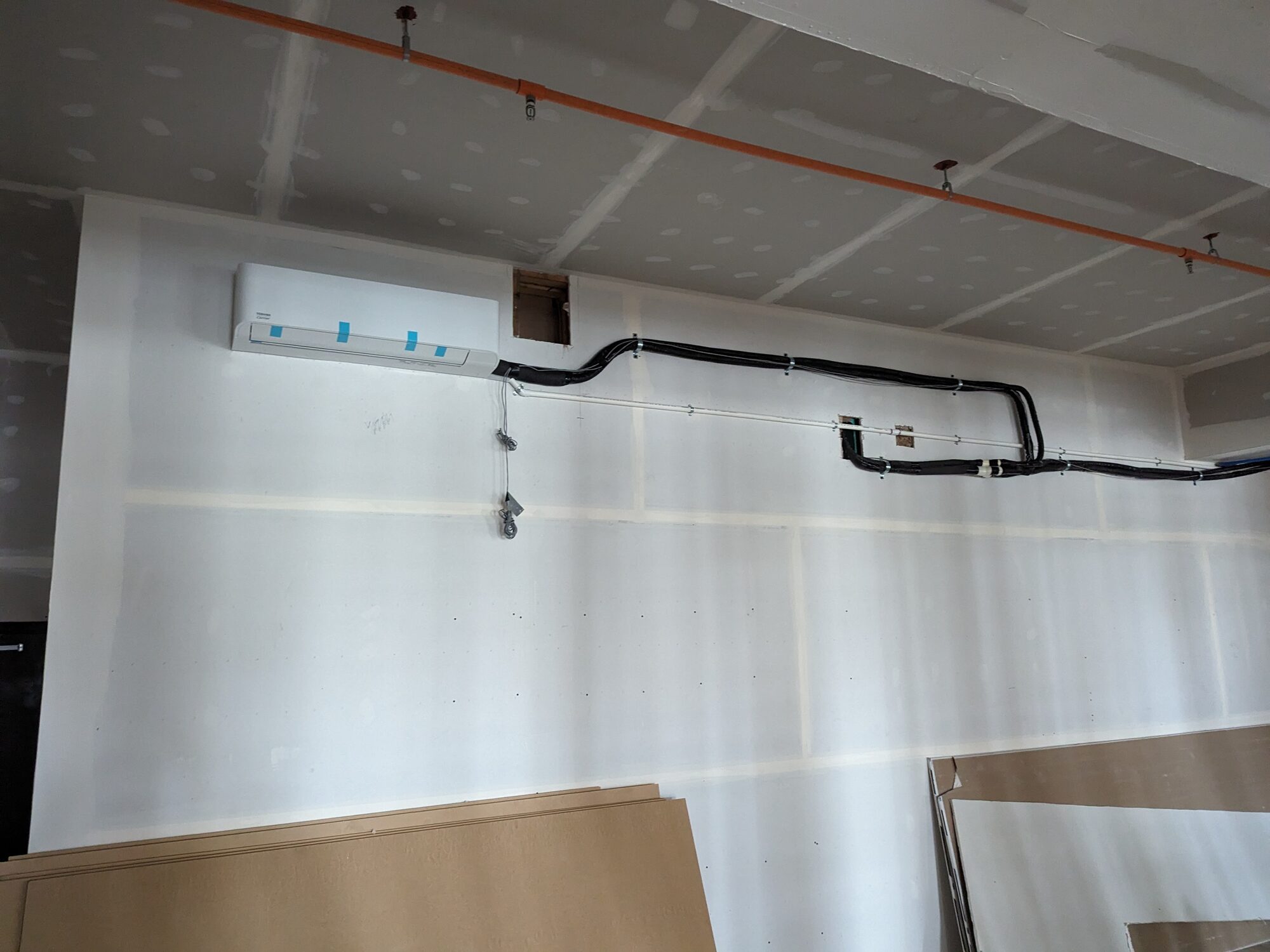
Heat doesn't have to be made. It can be moved.
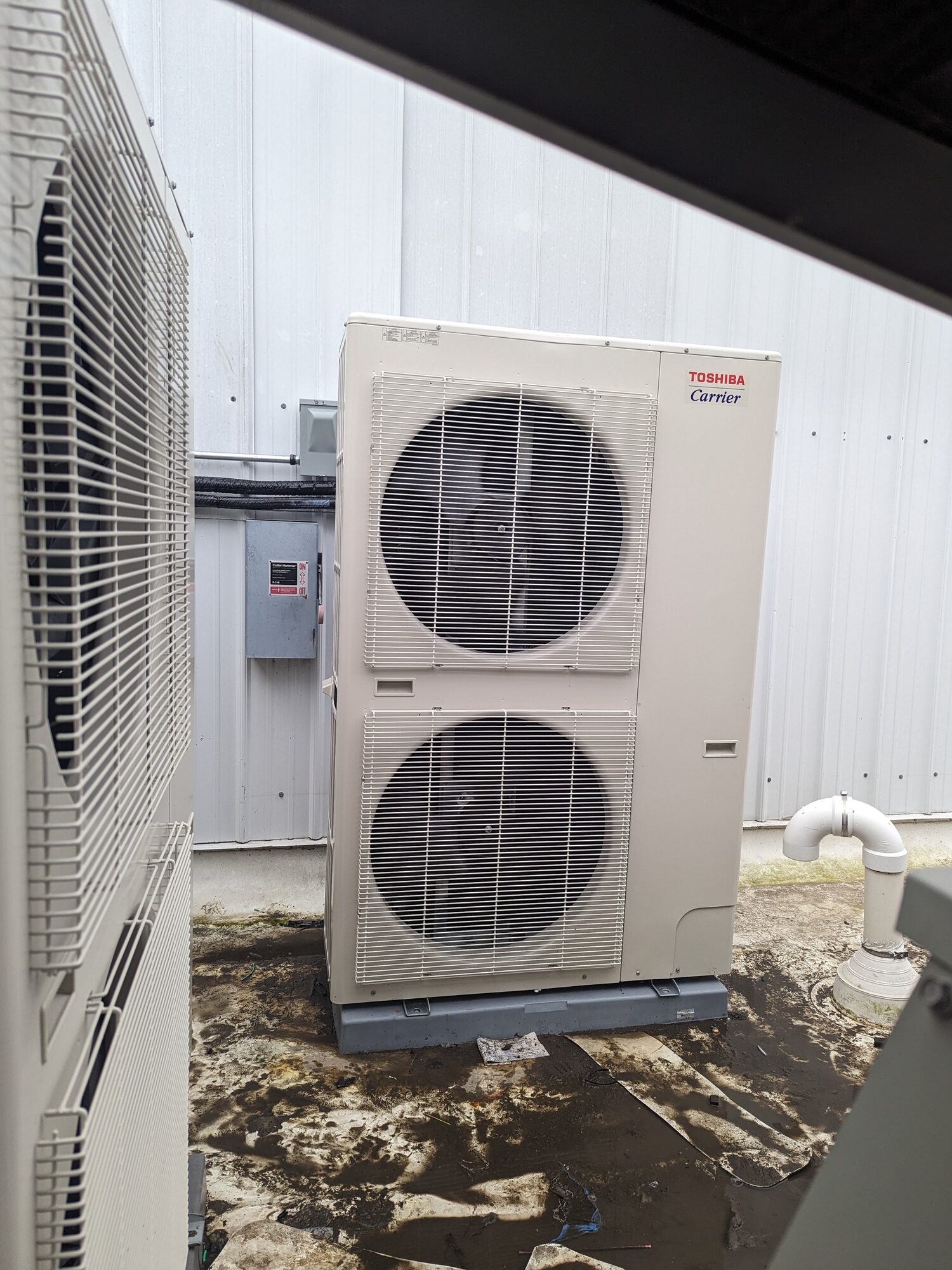
Toshiba-Carrier variable refrigerant flow systems move heat from where it isn't wanted to where it is — cooling one room while heating another, from the same equipment. Built for large homes, offices, and commercial buildings with more than one temperature need at once.
How heat recovery actually works
A conventional system generates heat, or removes it, and dumps the difference outside — every zone doing that work on its own. A Toshiba-Carrier heat recovery VRF system works differently: refrigerant carries heat between zones instead of only to the outdoors.
A south-facing office running its air conditioning on a January afternoon and a conference room down the hall calling for heat aren't fighting each other — the system pulls the heat the office wants gone and sends it straight to the room that wants it. Less energy spent making heat from nothing, less spent rejecting it outside. It's the same reason a good VRF system can undercut the operating cost of separate zoned equipment doing the same job piecemeal.
Each indoor unit is controlled independently, so every room, office, or zone is set to what it actually needs — not a compromise average pulled from a single thermostat.
Where VRF is the right call
Large, complex homes
Great rooms, primary suites, home theaters, additions — rooms with different loads and different owners' preferences, each held to its own setpoint from a small number of outdoor condensers instead of a house-wide compromise.
Offices and commercial spaces
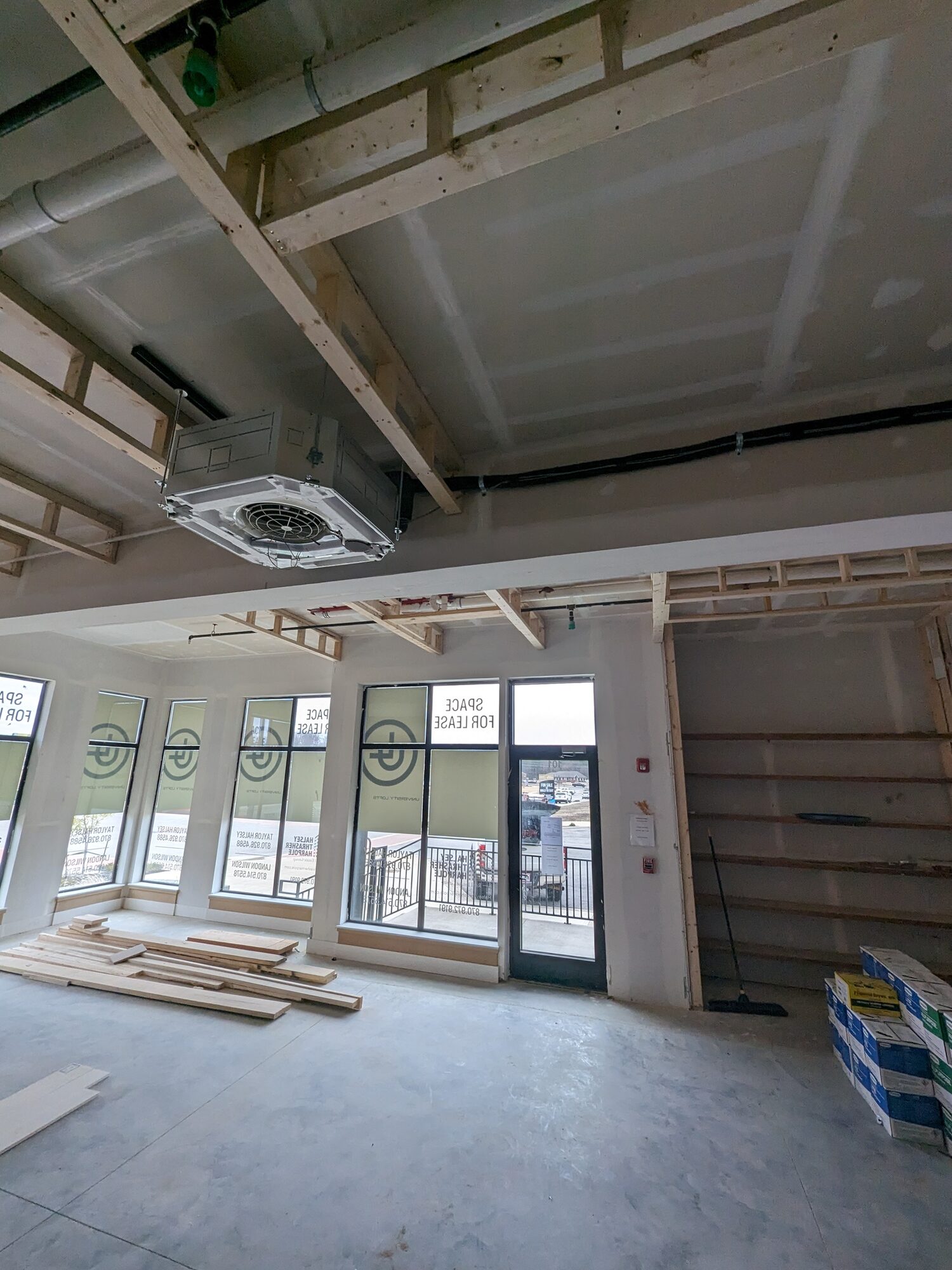
A server closet, a sun-exposed conference room, and an interior hallway rarely want the same thing at the same time. VRF handles all of it — including opposite calls for heating and cooling at once — from one system.
Additions and retrofits
Where ductwork isn't practical — a shop, a cabin, a room added on after the fact — a ductless indoor unit ties into the same VRF piping with no duct losses and no drywall opened up. For a single room or a detached building, a standalone mini-split is usually the simpler answer.
Ducted or ductless — sometimes both, on the same system
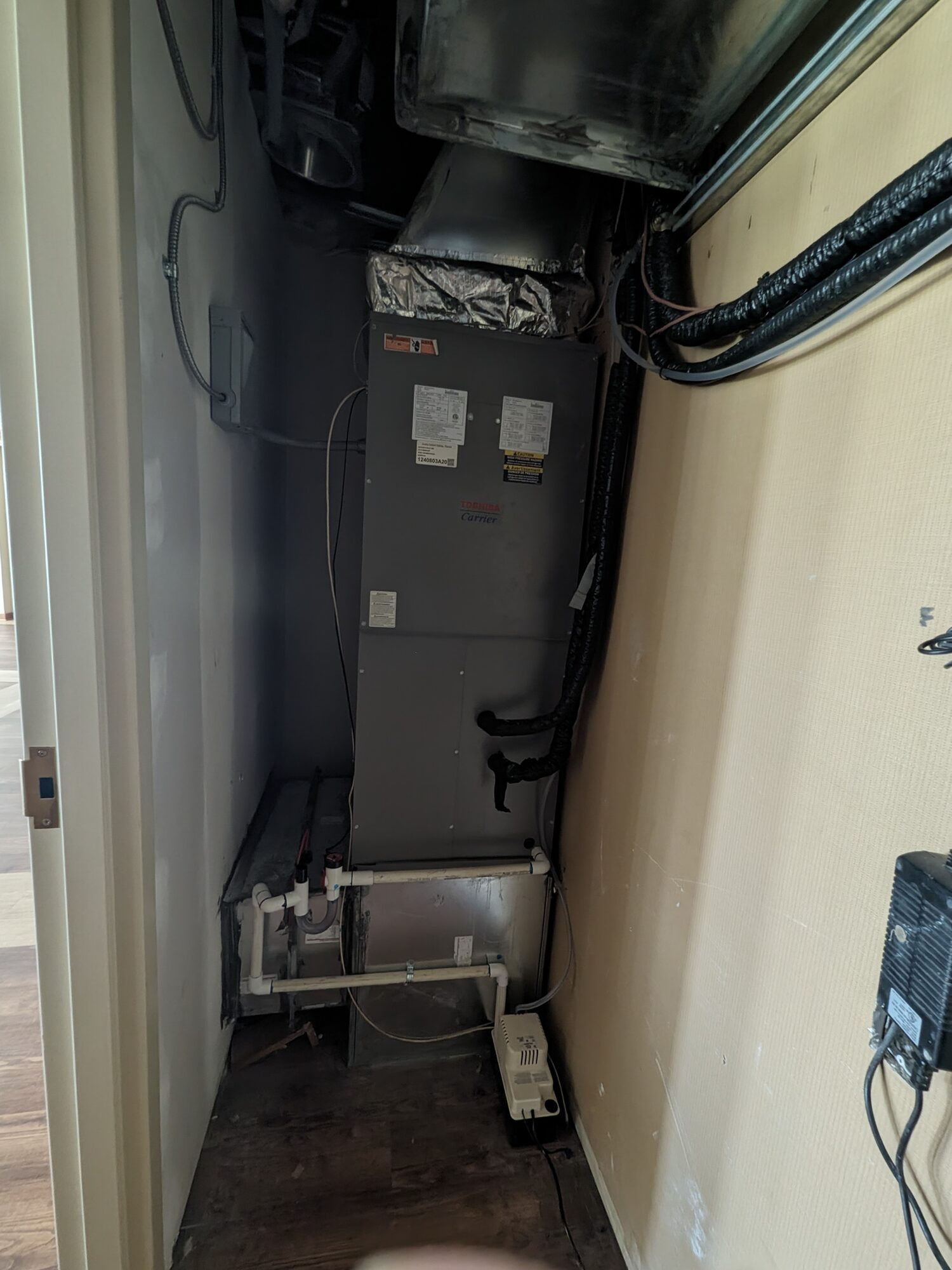
VRF isn't one type of indoor unit. Slim ducted units tie into short duct runs for rooms that want a normal vent and return. Wall-mounted or ceiling cassette units go where ductwork isn't an option. Both can run off the same outdoor condensers, mixed room by room to fit the building instead of forcing one approach on the whole project.
We design the system around the load calculation and the building, size the outdoor equipment and branch controllers to match, and commission every zone to the manufacturer's specification before we call it finished.
Is VRF the right fit for your building?
Zoning needs, load, and layout all factor into whether a heat recovery system makes sense over separate equipment. We'll walk the property, run the numbers, and give you a straight answer either way.
Financing is available with approved credit through Wells Fargo and FTL Finance. See options